Is Raw Dog Food Safe? What Vets Actually Recommend
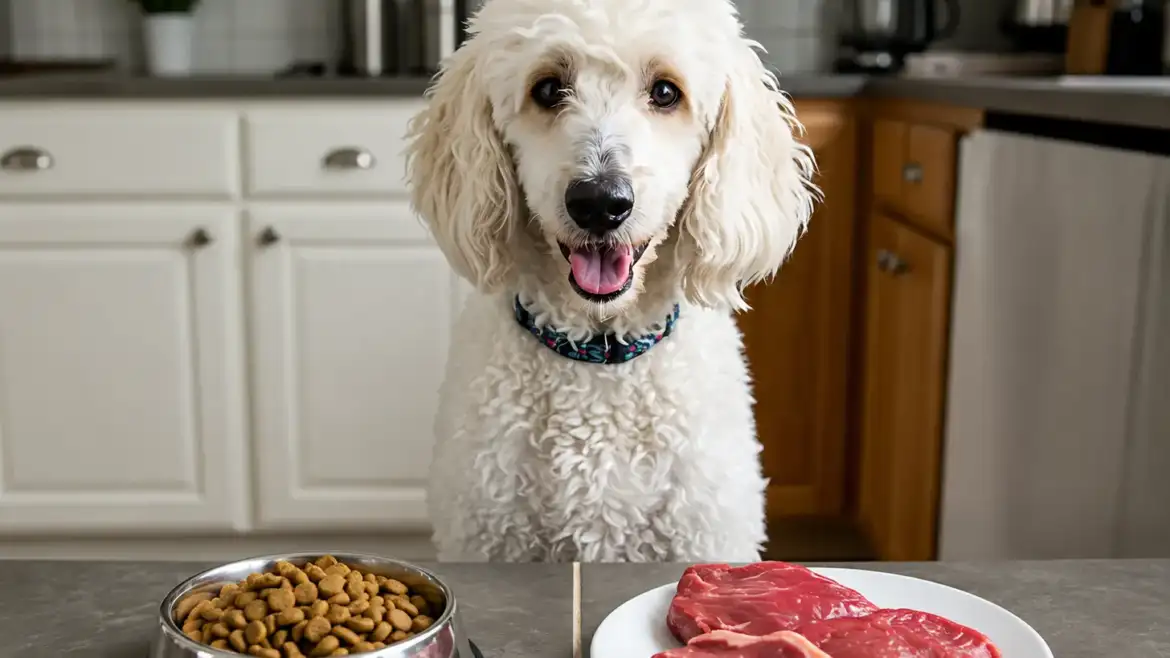
The debate surrounding raw meat diets for dogs often pits emotional feelings about “natural” living against evidence-based veterinary medicine. It’s a common topic in our consulting rooms. Let’s look at what the peer-reviewed science actually tells us, keeping things clear, simple, and maybe a little funny.
Belief vs. Science: The Digestion Showdown
The Common Belief
Supporters of raw meat-based diets (RMBDs) argue that because dogs evolved from wolves, they must thrive on uncooked meat, bones, and organs. People often report anecdotal improvements, like shinier coats or better digestion. This has turned raw feeding into a massive market.
The Scientific Reality (Evolution & Adaptation)
This is where it gets interesting! Dogs haven’t been wolves for at least 15,000 years. Genomic research (Axelsson et al., 2013) discovered that during domestication, dogs actually evolved extra copies of the amylase gene. This means they adapted to digest starch and carbs much more efficiently than wolves. The idea that they are nutritionally identical to a wild canid is simply not supported by genetics.
The Clinical Verdict on Benefits
Claims that raw diets are inherently healthier are based almost entirely on anecdotal stories (like “My dog’s coat got shinier!”). There are no high-quality, long-term controlled trials that have ever demonstrated superior health outcomes for raw-fed dogs compared to those on a nutritionally complete commercial diet. In other words, there is zero strong evidence proving raw feeding provides a long-term benefit.
The Real and Well-Documented Health Risks
While the benefits are a “maybe,” the risks are extremely well-documented and strong.
Bacteria Bombs
A 2019 systematic review (Davies et al.) found that raw pet food is routinely contaminated with harmful bacteria, including Salmonella, E. coli, Campylobacter, and Listeria. These aren’t just a problem for your pet; pets on raw diets shed these pathogens at very high rates.
Zoonotic Risk (Disease Passing to People)
This bacterial shedding creates a documented risk to human family members, especially children, the elderly, and anyone with a weakened immune system.
Antimicrobial-Resistant (AMR) “Superbugs”
This is the biggest concern. A 2022 UK study (Leonard et al.) found that dogs eating raw meat were more than three times as likely to carry antimicrobial-resistant E. coli compared to dogs on regular diets. These superbugs make it harder to treat infections, for both pets and people.
Veterinary Consensus & Verdict
Almost all major veterinary consensus bodies—including the AVMA, BSAVA, and WSAVA—advise against routine raw feeding. The consensus is clear: the documented risks to both the dog and the human household heavily outweigh the unproven benefits.
Summary
Claimed benefits are unproven and anecdotal.
Documented risks (including AMR E. coli) are severe and well-evidenced.
For clients who absolutely insist on raw feeding, we strongly recommend supervision by a board-certified veterinary nutritionist and strict hygiene protocols.
Get Personalized Nutrition Advice for Your Dog
Every dog is different. If you have questions about your dog’s diet- raw, commercial, or somewhere in between, Our team is here to help with evidence-based guidance tailored to your pet.
For personalized nutrition advice and support, contact us:
Lakeside Pet Hospital, Santa Rosa
Phone: 707-539-3393
Key Science Sources (Simplified for Reference)
- Evolution: Axelsson et al. (2013). “The genomic signature of dog domestication.” Nature. (Shows dogs evolved to digest starch).
- Bacteria Risks: Davies et al. (2019). “Raw diets for dogs and cats.” Veterinary Record. (Reviews bacterial contamination).
- Superbug Risk: Leonard et al. (2022). “UK dogs eating raw meat diets have higher risk of AMR E. coli.” J Small Anim Pract. (Shows the increased risk of antibiotic-resistant bacteria).
This article is written for informational purposes only and does not replace professional veterinary advice. Always consult your vet about your pet’s specific nutritional needs.