
6 min read
Leptospirosis in Dogs: What Santa Rosa Owners Need to Know This Rainy Season
Published
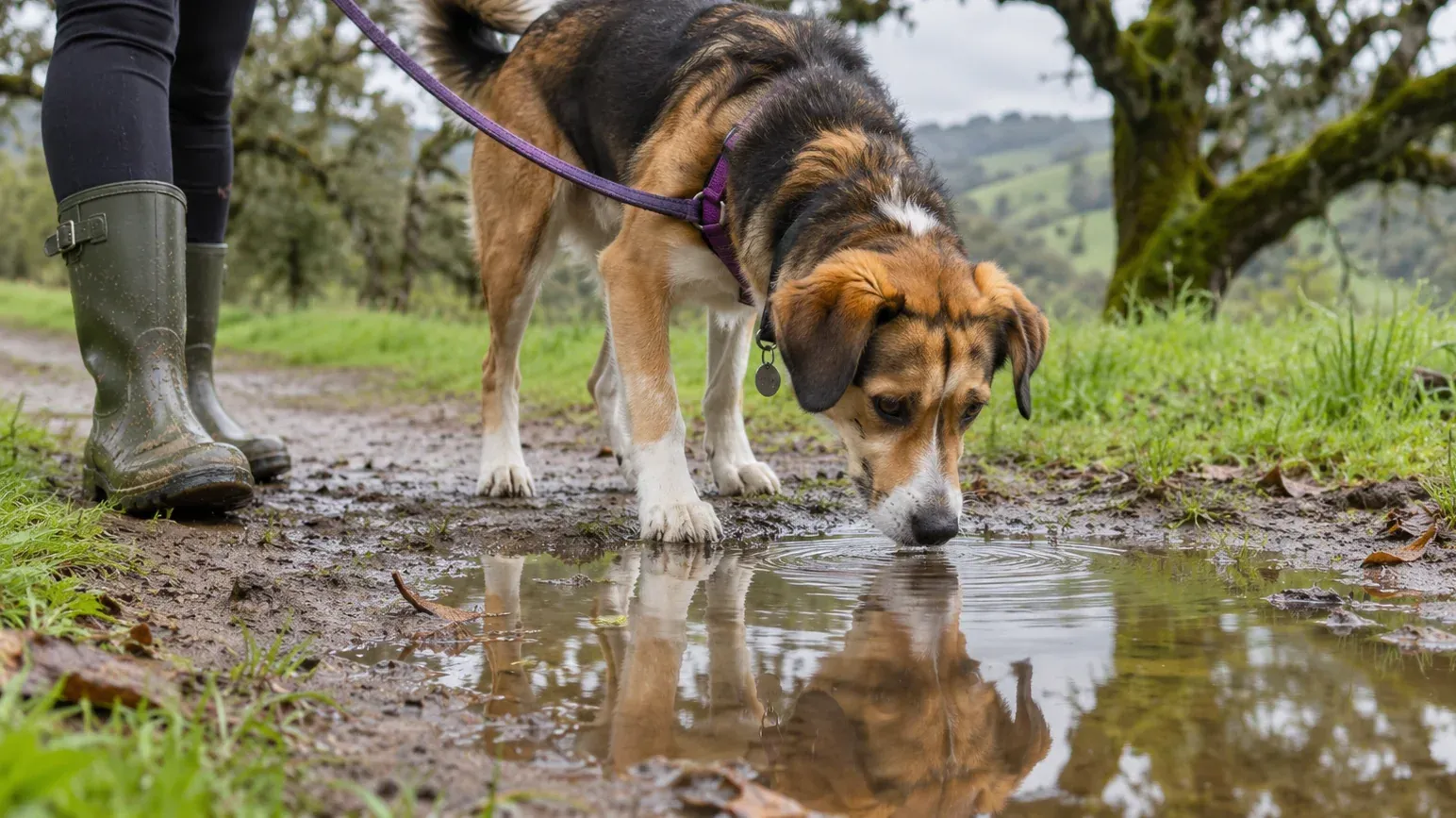
The first real storm of the season rolls through, and the next morning your dog is splashing through every puddle on the path around Spring Lake, stopping to lap up a drink from the muddy edge. Most of the time, nothing comes of it. But wet weather is when we start thinking about leptospirosis in dogs here in Santa Rosa, a bacterial infection that spreads through contaminated water and soil and can damage the kidneys and liver.
This guide covers how dogs catch lepto, the signs that mean you should call us today, and why the vaccine is now recommended for nearly every dog, including small dogs who rarely leave the backyard.
What Is Leptospirosis?
Leptospirosis is caused by spiral-shaped bacteria called Leptospira. Infected animals pass the bacteria in their urine, and rats are considered the most important carriers. Once it reaches puddles, creek banks or damp soil, the bacteria can survive for weeks to months, according to the American Veterinary Medical Association (opens in new tab).
Dogs pick it up when the bacteria enter through the mouth, eyes, nose or a small scrape in the skin. Drinking from a puddle, wading through runoff, or licking muddy paws after a walk are all common routes.
Why Leptospirosis in Dogs Matters in Santa Rosa Right Now
Lepto thrives where water and wildlife meet, which describes a lot of our favorite walks once the winter rains arrive. Standing water along Santa Rosa Creek Trail, flooded fields near the Laguna de Santa Rosa, and soggy lawns at Howarth Park all give the bacteria a place to wait.
Bay Area veterinarians raised the alarm early in 2026. ABC7 News reported (opens in new tab) confirmed dog cases in Berkeley and at a San Mateo specialty hospital, along with a San Francisco dog whose infection worsened his existing liver disease. Sonoma County has seen serious cases before too. The Sonoma Index-Tribune (opens in new tab) reported a Rohnert Park dog that died of kidney failure after a neighborhood walk.
None of this means you should keep your dog indoors all winter. It means lepto is part of life in Sonoma County, and prevention is simple.
Signs of Leptospirosis in Dogs
Early signs can look like an ordinary stomach bug, which is why lepto is easy to miss. Call us the same day if your dog shows any of these, especially after time around standing water:
- Fever or soreness: shivering, stiff muscles, or reluctance to move
- Low energy: lethargy or loss of appetite
- Stomach upset: vomiting or diarrhea
- Changes in drinking or urinating: much more than usual, or very little urine
- Yellow tint: to the gums, skin or whites of the eyes
- Breathing changes: fast breathing, coughing, or coughing up blood
Breathing trouble or very little urine is an emergency. During our hours, call us right away. After hours, go straight to a 24-hour emergency hospital. You can find more on urgent signs on our emergency care page (opens in new tab).
My Dog Drank From a Puddle. What Now?
Take a breath. Most dogs that drink from a puddle never get sick, and a single drink is not a reason to rush in. Here is what we suggest:
- Check the vaccine. Is your dog’s lepto vaccine current? If you are not sure, call us and we will look it up.
- Watch closely. Over the next few days and weeks, look for any of the signs above.
- Mention the water. If your dog seems off, tell us about the exposure when you call. That detail helps us decide which tests to run.
Lepto is diagnosed with blood and urine tests, and it is treated with antibiotics plus supportive care such as fluids. Dogs caught early generally do better, so it is always worth calling sooner rather than later.
The Leptospirosis Vaccine for Dogs: Who Needs It?
For years, lepto was treated as an optional vaccine for dogs that hunted or hiked. That thinking has changed. The 2023 consensus statement from the American College of Veterinary Internal Medicine (opens in new tab), written by researchers at UC Davis and colleagues, recommends yearly lepto vaccination for all dogs, regardless of breed. The AVMA summarized the panel’s view plainly: all dogs are at risk “regardless of signalment, geographic location, lifestyle, and the time of year.”
Here is how the schedule works:
- First series: puppies and unvaccinated adults get two doses, four weeks apart, starting at 12 weeks of age or older.
- Yearly booster: one dose every year keeps protection going.
- Boarding and daycare: dogs that board or go to daycare should be vaccinated, and the ACVIM panel recommends that those facilities require it.
If you have a new puppy, the lepto series fits right into the visits we cover in our puppy’s first vet visit guide (opens in new tab).
What About Small Dogs?
We hear this question often. Small dogs in town are not off the hook, since rats live in suburban yards, alleys and garden beds, and small urban dogs remain a group where lepto shows up regularly. Some owners also worry about vaccine reactions in little dogs. According to the ACVIM statement, newer research shows severe reactions to the lepto vaccine are no more common than with the distemper-parvo or rabies vaccines. If your dog has had a reaction to any vaccine before, tell us, and we will plan the visit around it.
Easy Ways to Lower Your Dog’s Risk
- Vaccinate yearly. Keep the lepto vaccine current.
- Bring water. Carry fresh water on walks so your dog is less tempted by puddles.
- Skip the standing water. Steer clear of stagnant water, flooded fields and muddy runoff, especially after storms.
- Discourage rodents. Secure trash, compost and pet food around your yard.
- Wipe paws. Clean muddy paws when you get home.
Winter brings other trail hazards too. If you walk in wooded areas, read our guide on what to do if your dog eats a mushroom (opens in new tab).
Frequently Asked Questions About Leptospirosis in Dogs
Can a vaccinated dog still get leptospirosis?
It is possible, because no vaccine is 100 percent effective. Vaccination is still the best protection available, and the ACVIM statement notes that protection lasts at least 12 months, which is why yearly boosters matter.
How often does my dog need the lepto vaccine?
Once a year, after an initial series of two doses given four weeks apart.
Is the leptospirosis vaccine safe for small dogs?
Current research shows serious reactions are no more common than with other routine dog vaccines. Your veterinarian can talk through your dog’s history before vaccinating.
Can I catch leptospirosis from my dog?
The risk to owners is low. If your dog is being treated for lepto, avoid touching their urine and wear gloves when cleaning up accidents until your dog has had 48 hours of antibiotic treatment. If you have questions about your own health, contact your physician.
Protect Your Dog Before the Rains Peak
Lakeside Pet Hospital is family-owned, serving Sonoma County since 1961. If your dog is due or overdue for the lepto vaccine, or you are not sure, we can check their record and get them protected before the wettest weeks of the season. Learn more about our preventative pet care (opens in new tab), or book an appointment online (opens in new tab).
Call us at (707) 539-3393 or visit us at 4331 Montgomery Dr, Santa Rosa, CA 95405.
References
- Sykes JE, Francey T, Schuller S, Stoddard RA, Cowgill LD, Moore GE. Updated ACVIM consensus statement on leptospirosis in dogs (opens in new tab). Journal of Veterinary Internal Medicine. 2023;37(6):1966-1982.
- American Veterinary Medical Association. Updated guidance on canine leptospirosis reflects better understanding of disease (opens in new tab). March 2024.
- ABC7 News. Bay Area veterinarians report spike in deadly, contagious disease affecting dogs (opens in new tab). February 12, 2026.
- Sonoma Index-Tribune. Veterinarians on alert for dog-deadly lepto (opens in new tab).
This article is for educational purposes only and is not a substitute for professional veterinary advice, diagnosis, or treatment. If you have concerns about your dog’s health, please contact your veterinarian.